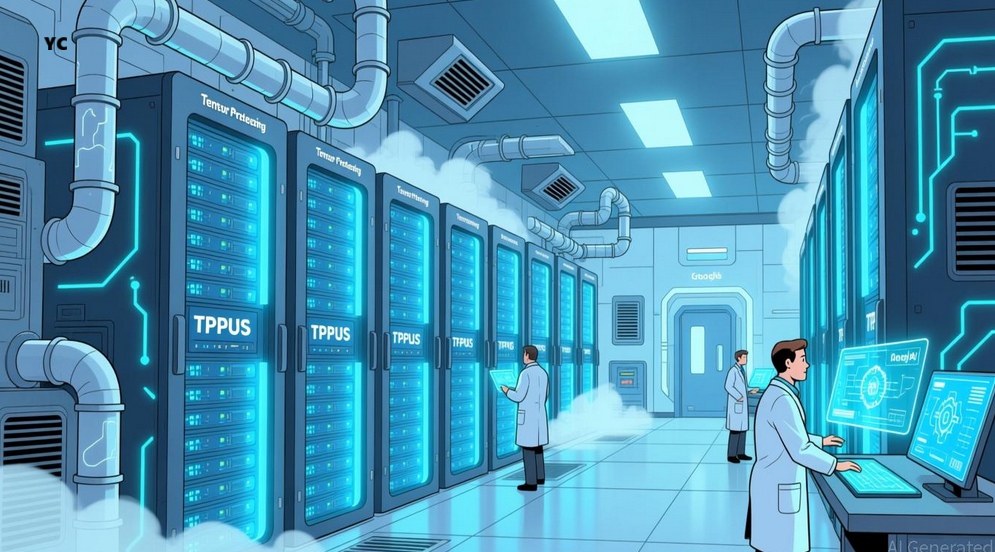
The United States is entering a new phase of AI expansion as two major data center projects in Texas and New York receive a combined $50 billion in fresh investment. These facilities, being built in partnership with Fluidstack, are designed specifically to support Anthropic’s advanced AI systems. With computing demands rising rapidly, the new centers will focus heavily on power availability, operational efficiency, and the infrastructure needed to train and run next-generation AI models at scale.
A Strategic Push to Expand US AI Capacity
Fluidstack, known for providing large GPU clusters to companies such as Meta, Midjourney, and Mistral, is taking a central role in developing these custom-built sites. The collaboration signals a broader trend across the tech industry: an aggressive shift toward building more AI infrastructure within the United States.
Throughout 2024 and 2025, technology firms have faced mounting pressure from both market forces and policymakers to localize their data resources. The Trump administration has openly encouraged companies to invest in domestic infrastructure rather than relying on overseas expansion. As AI workloads surge, so does the need for secure, high-performance data centers positioned inside US borders.
Part of a National AI Strategy
This move aligns with a directive issued in January, when President Donald Trump ordered federal agencies to create a comprehensive AI Action Plan aimed at making the United States “the world capital of artificial intelligence.” In the months that followed, major technology companies participated in a White House AI summit, where many outlined ambitions to increase domestic compute capacity and energy investment.
The upcoming data center projects serve as a direct response to this national strategy. Built to support cutting-edge AI models, these facilities will strengthen America’s digital infrastructure and ensure that compute capacity—one of the most important resources in AI development—remains accessible within the country.
Job Creation and Local Economic Growth
According to early estimates, the two facilities will generate approximately:
-
800 full-time operational positions
-
2,400 construction jobs
These roles will support long-term economic development in both Texas and New York. The sites are scheduled to roll out in multiple phases through 2026, offering years of sustained employment and local investment. As AI continues to transform industries from healthcare to manufacturing, the new data centers are expected to become key assets in the national effort to maintain leadership in emerging technologies.
Why Anthropic Is Expanding So Quickly
Anthropic has grown rapidly due to its technical research, focus on AI safety, and ongoing efforts in alignment and interpretability. Its flagship model, Claude, is now used by more than 300,000 business customers. Over the last year, the number of large enterprise clients—those generating over $100,000 per year each—has increased nearly sevenfold.
The company’s rapid rise has required a dramatic expansion in compute power. Anthropic says demand for its systems has far outpaced earlier projections, leading to the need for large, purpose-built data center environments.
The decision to partner with Fluidstack stems from the company’s ability to deploy massive power capacity quickly. Anthropic leaders say Fluidstack can deliver multi-gigawatt infrastructure on aggressive timelines, making them well-suited for frontier-scale AI projects.
A Growing Footprint Among America’s Largest AI Builders
Anthropic’s expanding presence places it among the most ambitious builders of AI infrastructure in the United States. The company has already partnered with Amazon to establish a 1,200-acre data center campus in Indiana, part of an $11 billion investment. That site is already operational, unlike many of the AI campuses announced by competitors that remain in early planning phases.
Anthropic has also expanded its compute partnership with Google, securing tens of billions of dollars in additional resources across Google’s data center network. These developments highlight the mounting need for compute at a scale that only a handful of companies can supply.
Industry-Wide Competition for Compute and Energy
Anthropic’s expansion comes as other leaders in the AI industry pursue their own massive infrastructure plans. OpenAI, for example, has secured more than $1.4 trillion in long-term commitments from partners such as Nvidia, Broadcom, Oracle, Microsoft, Google, and Amazon. These commitments underscore how critical compute has become—and how expensive it is.
The unprecedented demand has raised new concerns about whether the US power grid can support this wave of expansion. Energy-intensive GPU clusters require reliable, large-scale electricity supply, prompting questions about grid modernization, transformer availability, and the long-term sustainability of AI infrastructure.
Anthropic’s Long-Term Vision
Anthropic’s leaders say that the company’s mission involves building AI systems capable of advancing scientific research and solving complex global problems. Achieving these breakthroughs will depend on robust infrastructure capable of supporting advanced model training.
“To build the next generation of AI that improves lives and drives scientific progress, we need infrastructure that can keep up with the pace of development,” said Dario Amodei, Anthropic’s co-founder and CEO. He emphasized that the new data center projects will both strengthen the US AI ecosystem and create high-quality American jobs.
Financial Outlooks and Industry Comparisons
Internal estimates cited by The Wall Street Journal suggest that Anthropic expects to reach financial break-even around 2028. OpenAI, by contrast, is projected to experience roughly $74 billion in operating losses that same year, illustrating the divergent strategies being taken by the two AI leaders.
For Anthropic, controlled expansion, strategic partnerships, and safety-focused research have defined the company’s growth. The company says its $50 billion investment is essential for both short-term capacity needs and long-term competitiveness.
Federal Policy and Infrastructure Funding Debates
The rapid acceleration of US-based AI infrastructure has sparked ongoing debates about government support. Last week, OpenAI reportedly asked the Trump administration to expand CHIPS Act tax credits to include AI data centers and grid components such as transformers.
This request came after controversial comments by CFO Sarah Friar, who mentioned the possibility of a federal “backstop” for compute deals. OpenAI has since backed away from the idea, but the incident highlighted the broader uncertainty around who should finance America’s AI infrastructure—private companies, taxpayers, or some combination of the two.
As lawmakers weigh these questions, companies like Anthropic and OpenAI continue to race ahead, building out the foundations of what will likely become one of the most important technological ecosystems of the century.