Samsung Electronics has officially introduced its first multi-folding smartphone, marking a major milestone in the company’s efforts to stay ahead in the rapidly evolving foldable-phone market. Announced in Seoul on Dec. 2, the new Galaxy Z TriFold showcases Samsung’s latest attempt to strengthen its leadership as competitors, especially from China, move aggressively into the foldable space.
Although foldable phones still represent a small slice of the overall smartphone market, Samsung believes demand will grow steadily. The Galaxy Z TriFold reflects that optimism — even as analysts warn that high prices and production challenges will likely keep foldables in a niche category for now.
A Closer Look at the Galaxy Z TriFold
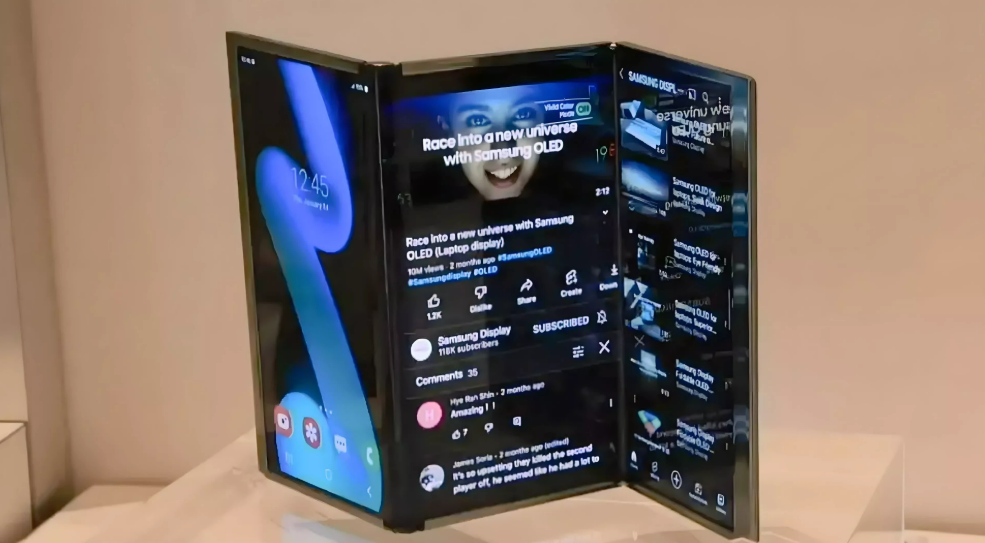
Samsung’s new TriFold smartphone is priced at around 3.59 million won (about $2,440), making it one of the company’s most premium devices to date. What sets it apart is its unique three-panel folding system, which expands into a 10-inch (253.1 mm) display — roughly 25% larger than the screen on the current Galaxy Z Fold 7.
The device aims to offer the convenience of a phone with the productivity of a tablet. When unfolded, the larger display is designed for multitasking, video watching, reading, and productivity apps. When folded down, it still fits into a pocket like a traditional smartphone.
Alex Lim, Executive Vice President and head of Samsung’s Korea Sales & Marketing Office, said he expects the TriFold to contribute to long-term growth in the foldable category. According to Lim, the device is built for users who truly want cutting-edge technology, not for the general market. That means Samsung does not expect this model to produce massive sales; instead, it serves as a statement of innovation.
Where and When the TriFold Will Launch
Samsung plans a phased rollout for the TriFold:
-
South Korea: December 12
-
China, Singapore, Taiwan, UAE: Before the end of this year
-
United States: Expected as early as Q1 next year
A gradual release gives Samsung time to observe early reactions, monitor any hardware issues, and adjust production levels before expanding globally.
Performance and Battery Improvements
The TriFold includes Samsung’s largest battery ever used in a flagship device. Despite its complex design, the phone supports super-fast charging, allowing it to reach 50% charge in just 30 minutes. This is crucial, as foldable phones typically consume more power due to their larger, more demanding displays.
Samsung also noted that the cost of memory chips and other essential components has risen significantly. These rising costs made it challenging to determine a final price point, but the company chose to focus on quality and performance over affordability.
Analysts: A Showcase Device More Than a Mass-Market Product
Industry analysts generally agree that the Galaxy Z TriFold is an impressive demonstration of Samsung’s engineering abilities — but they also believe it will have limited mainstream appeal in the short term.
Ryu Young-ho, a senior analyst at NH Investment & Securities, called the TriFold a first-generation device, noting that any first-generation design is likely to face challenges. Issues such as durability, hinge strength, and long-term reliability will be important to watch as more consumers start using the device.
Ryu also pointed out that Samsung’s Galaxy Z Fold series has already benefited from seven generations of improvements. Over time, the Fold lineup became cheaper to produce and more polished. The TriFold, however, is starting at square one, meaning initial production will likely be expensive and slower.
For that reason, analysts expect Samsung to use the TriFold as a technology showcase rather than a major revenue driver. The company will likely collect feedback, identify pain points, and gradually refine the multi-fold concept.
Rising Competition: Huawei and Apple Enter the Foldable Arena
Samsung is no longer the only major player in the foldable market. Huawei released the world’s first three-way folding smartphone in September of last year. The device gained attention for its ambitious design and innovative hinge system, signaling that Chinese brands are investing heavily in the foldable category.
Meanwhile, Apple is widely expected to release its first foldable device next year. While Apple has not confirmed any details, analysts believe the company’s entry will significantly increase interest in foldable devices worldwide — and also heighten competitive pressure on Samsung.
Despite these developments, experts say foldable smartphones will remain a small segment of the market. According to Counterpoint Research:
-
Foldables will make up less than 2% of total smartphone shipments this year
-
By 2027, they are expected to account for under 3% of the market
These numbers show that, while foldables attract attention and drive innovation, they have not yet become mainstream due to high pricing, complicated production and durability concerns.
Samsung’s Market Share Swings Dramatically
Samsung continues to dominate the foldable market overall, but its market share often fluctuates depending on product release timing. Counterpoint Research reported that Samsung’s share jumped from 9% in the previous quarter to 64% in the third quarter after new product launches.
This sharp swing highlights how important launch timing is in the foldable category. Consumers likely postpone purchases until new foldable models become available, causing large shifts in market share throughout the year.
With the introduction of the TriFold and the ongoing success of the Galaxy Z Fold and Flip series, Samsung hopes to keep its lead — even as competitors become more aggressive.
What the TriFold Means for the Future of Smartphones
While the TriFold may not become a mass-market hit immediately, its arrival signals important shifts in mobile-device design. Here are some key implications:
1. Foldables Are Becoming More Versatile
The TriFold blurs the line between phones, tablets and even small laptops. Users can carry a compact device that transforms into a larger productivity tool when needed.
2. Multi-Fold Technology Is Just Beginning
Samsung’s TriFold is one of the first commercial attempts at a multi-folding design. If consumers respond well, other brands may accelerate their development of similar devices.
3. Innovation Pressure on Rivals
Huawei’s and Apple’s moves into foldables show that the race is heating up. Samsung’s launch raises expectations across the industry, pushing competitors to innovate faster.
4. Durability Will Determine the Category’s Future
Consumers will pay close attention to how well the TriFold holds up over time. Strong early feedback could pave the way for more multi-fold devices in the coming years.
Conclusion
The Galaxy Z TriFold is an ambitious step forward for Samsung and the foldable-phone market. Although the device is unlikely to generate mass-market sales right away, it represents a bold attempt to redefine what a smartphone can be.
As rivals like Huawei and Apple push deeper into foldable technology, the Galaxy Z TriFold sets the stage for a more competitive and innovative future. Samsung’s new device may be a glimpse of the next big evolution in mobile tech — even if it takes a few years for this style of phone to become mainstream.